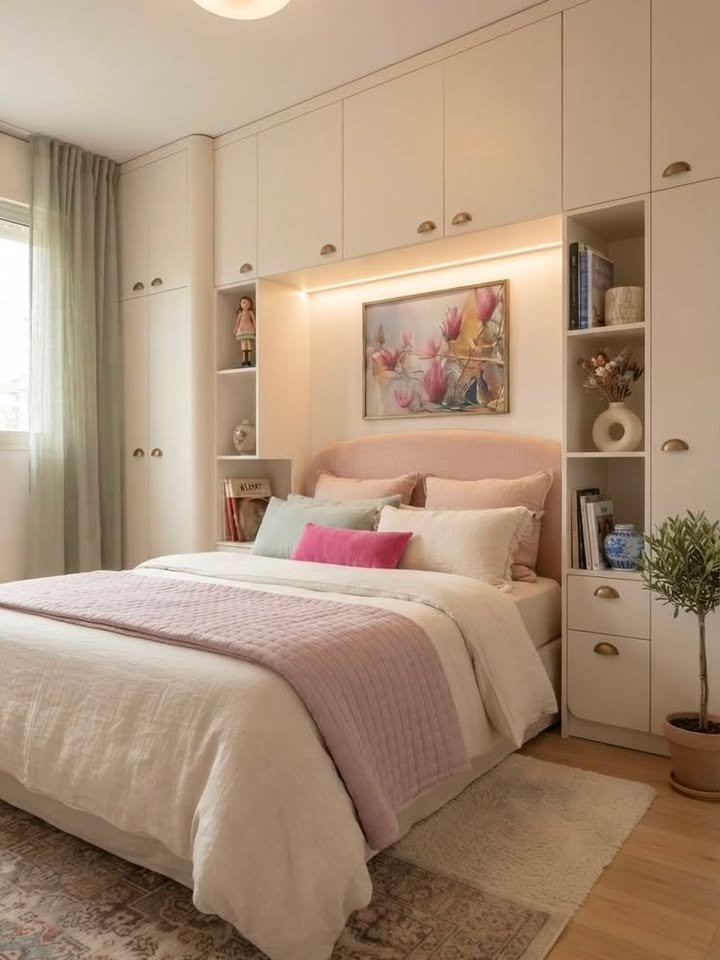
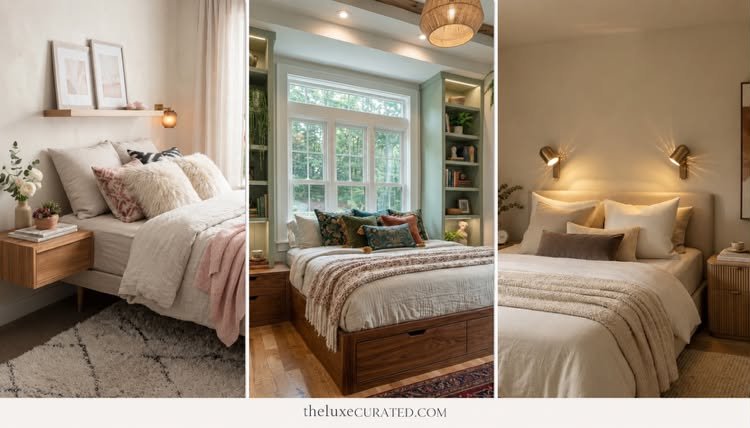
A queen bed can take up a lot of space in a small bedroom, but the right layout can make the room feel much more open and comfortable. The key is not simply choosing smaller furniture. It is about where you place the bed, how you use the walls, and how much walking space you leave around the room.
These small bedroom layout ideas are designed for real bedrooms where every inch matters. From placing the queen bed under a window to using floating nightstands, built-in storage, or a small desk, these layouts can help you create a bedroom that feels organized without looking crowded.
If you are looking for small bedroom ideas with a queen bed, start with the layout before buying new furniture. A few smart changes can make a bigger difference than adding more decor.
12 Small Bedroom Layout Ideas
1. Center the Queen Bed on the Main Wall
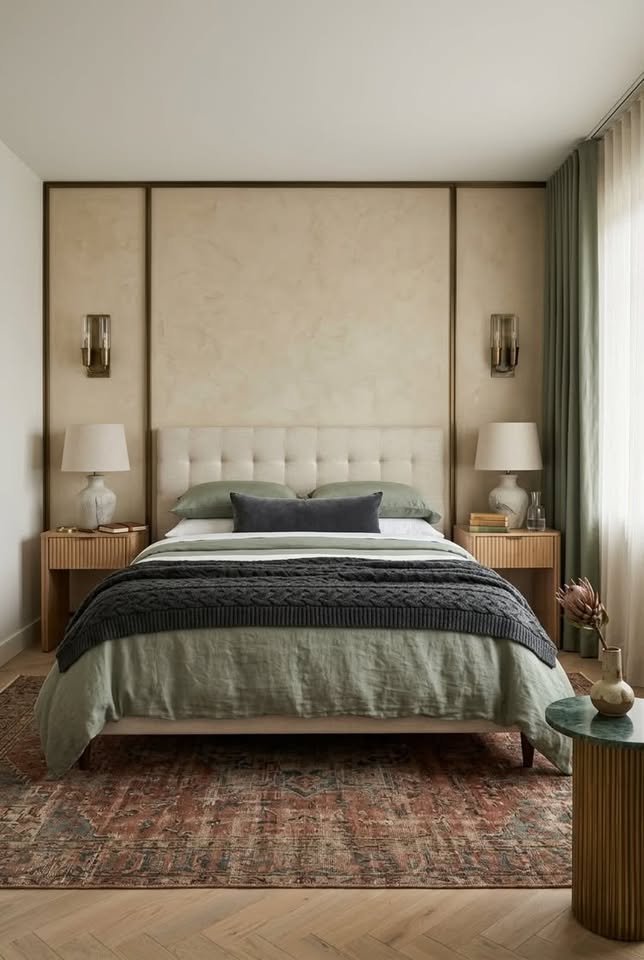
One of the easiest small bedroom layout ideas is to center the queen bed on the largest uninterrupted wall. Keeping the bed in the middle creates a balanced look and gives you a clear walking path on both sides.
You do not need large nightstands to make this layout work. Slim tables or floating bedside shelves are usually enough for a phone, book, lamp, and a few everyday items.
How to Style It
- Use a slim upholstered or wooden headboard.
- Keep both sides of the bed visually balanced.
- Choose narrow nightstands instead of bulky ones.
- Use floor-to-ceiling curtains to make the room feel taller.
- Keep the bedding simple with two or three complementary tones.
What to Avoid
- Oversized Nightstands: They can quickly eat into the walking space.
- Bulky Headboards: Deep headboards make the room feel tighter.
- Short Curtains: Curtains ending at the window can make the walls look shorter.
Pro Tip
If your nightstands are very small, use wall-mounted sconces instead of table lamps. You will gain useful surface space without losing bedside lighting.
2. Tuck the Queen Bed Into a Corner
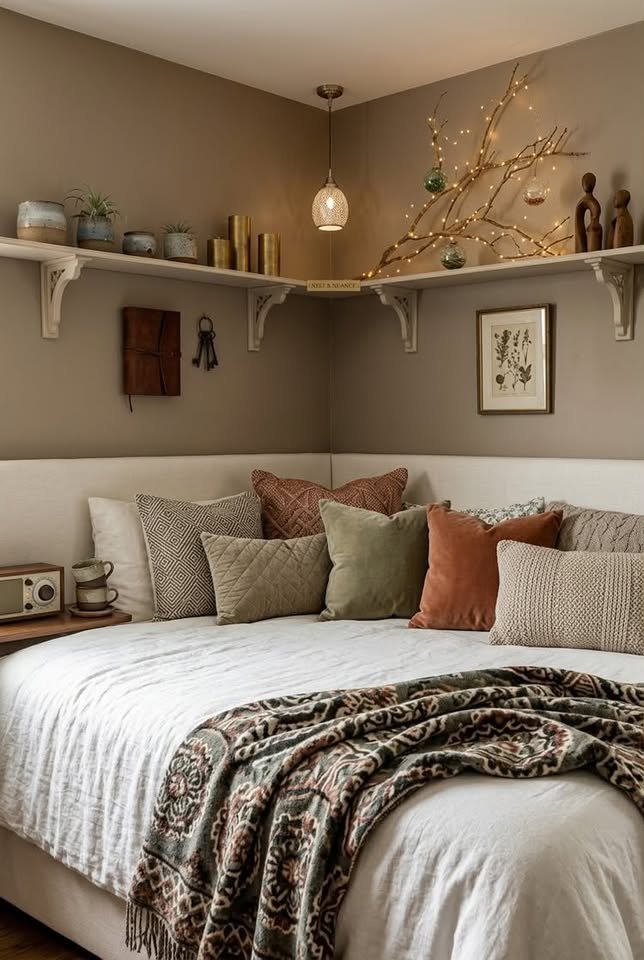
If you rarely use both sides of the bed, pushing the queen bed into a corner can give you much more usable floor space. This is particularly helpful in very small or awkwardly shaped bedrooms.
The open side of the room can then be used for a narrow dresser, wardrobe, small desk, or simply extra walking space.
How to Style It
Create a cozy corner rather than making the bed look accidentally pushed against the wall. Use a padded headboard or large back cushions and add a few layered pillows.
Floating shelves can also replace traditional bedside furniture.
What to Avoid
- Too Many Shelves: A wall full of shelves can make the corner feel visually heavy.
- Bare Wall Behind the Bed: Add a slim headboard, wall molding, or soft wall paneling to make the arrangement look intentional.
- Large Furniture Opposite the Bed: Keep the opposite side light and open.
Pro Tip
Use the bed like a daybed during the day. A long lumbar pillow and two large cushions can make the corner feel like a comfortable reading or relaxing spot.
3. Place the Queen Bed Under a Window
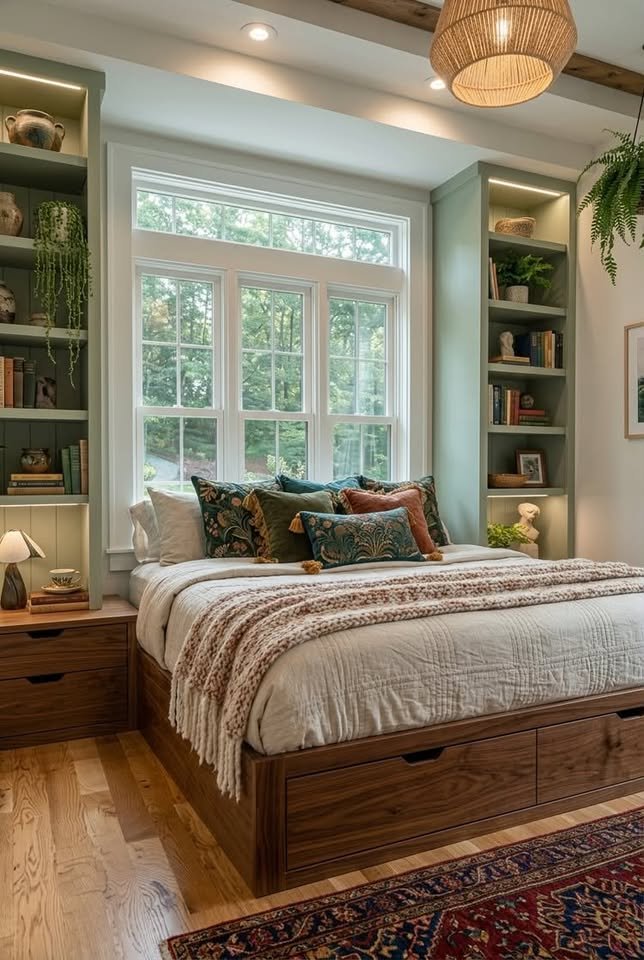
A window does not always have to stay completely separate from the bed. In some small rooms, placing the queen bed under the window can actually create the most practical floor plan.
This frees up the other solid walls for a wardrobe, dresser, or additional storage.
How to Style It
Choose a low-profile bed frame so the window remains visible. Keep window treatments light and simple, especially if the window is the main source of natural light.
If there is enough space underneath the window, a low headboard can give you support without blocking the glass.
What to Avoid
- Very Tall Headboards: They can cover too much of the window.
- Heavy Curtains: Thick curtains around the bed can make the entire wall feel crowded.
- Blocking the Window Completely: Make sure the bed does not prevent the window from being opened or accessed.
Pro Tip
Choose a bed with built-in drawers underneath. When the bed is already using the window wall, hidden storage can help you avoid adding another large piece of furniture.
Related:
- 15 Modern Black and White Bedroom Makeover Ideas on a Budget
- 15 Cozy Soft Pink Bedroom Ideas
- 7 Fake Plants for Bedroom: Aesthetic Ideas to Style Your Space
- 10 Artificial Pampas Grass Decor Ideas for a Modern Home
4. Put the Queen Bed Against One Side Wall
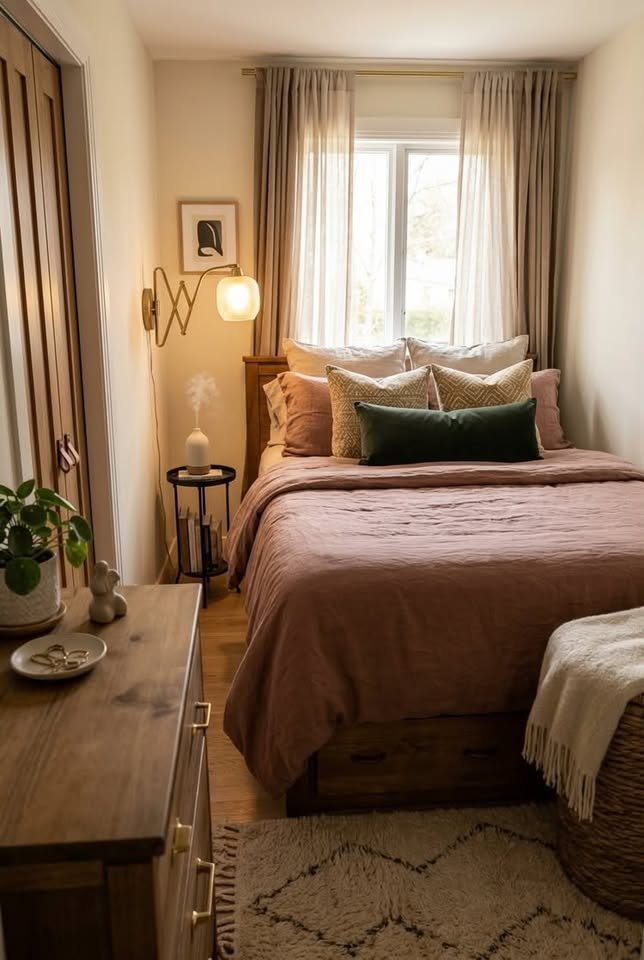
For a long and narrow bedroom, placing the queen bed against one side wall can create a much better walking path.
Instead of trying to center everything, you can use the empty side of the room as one continuous walkway. This can make it easier to reach the closet, dresser, or bedroom door.
How to Style It
Use a narrow round bedside table or a small floating shelf beside the bed. A wall-mounted lamp is another smart choice because it does not take up floor space.
Keep the opposite wall relatively open.
What to Avoid
- Wide Bedside Tables: They reduce the already limited walkway.
- Blocking Closet Doors: Check that doors can open fully before finalizing the position.
- Too Much Furniture: A narrow bedroom usually benefits from one useful storage piece rather than several small ones.
Pro Tip
A swing-arm wall sconce is especially useful here. You can move the light toward you while reading and push it back against the wall when you need more walking space.
5. Use Slim Floating Nightstands
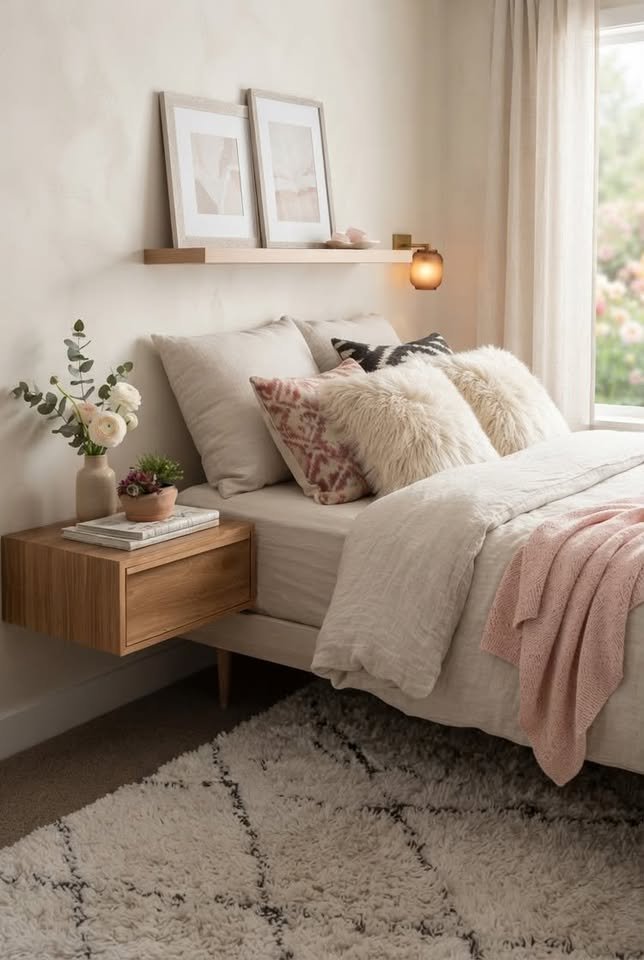
When floor space is limited, floating furniture can make a surprisingly big difference. Instead of placing two traditional nightstands beside your queen bed, mount slim drawers or shelves directly to the wall.
The open floor underneath creates a lighter appearance and makes cleaning easier too.
How to Style It
Keep the floating nightstands small and practical. One drawer or a shallow shelf is often enough.
You can also install small wall lights above them and keep the top almost empty.
What to Avoid
- Deep Floating Cabinets: They can stick too far into the walking area.
- Too Much Decor: Small shelves become cluttered very quickly.
- Visible Cables: Hide lamp and charging cables where possible for a cleaner look.
Pro Tip
A slim picture ledge above the bed can hold a few framed prints. It is easier to change the artwork later than a large gallery wall.
6. Build Storage Around the Queen Bed
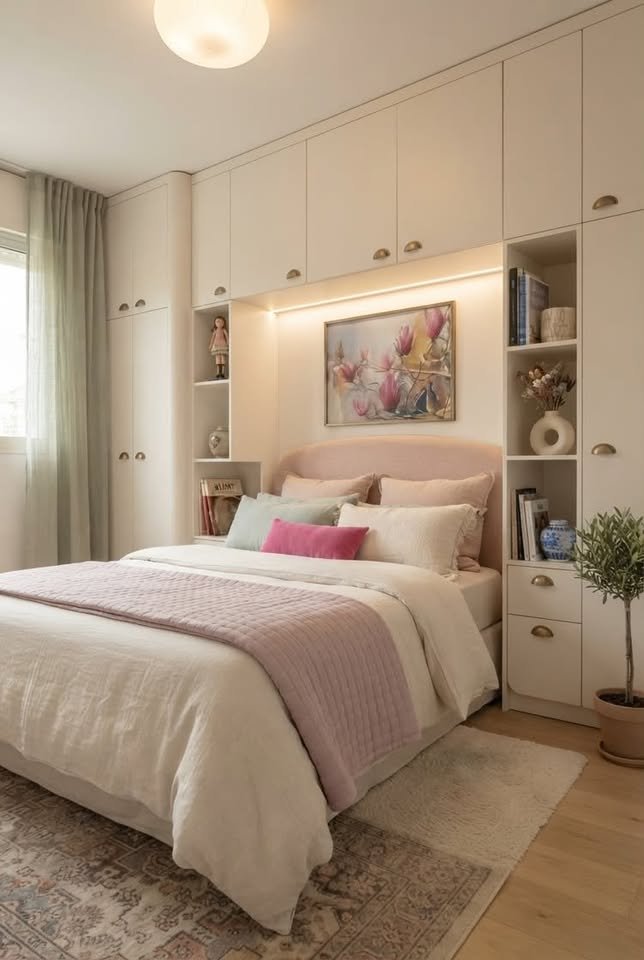
If storage is your biggest problem, use the wall around the queen bed instead of filling the rest of the room with separate furniture.
Floor-to-ceiling cabinets can turn one wall into a complete storage area while keeping the center of the bedroom relatively open.
How to Style It
Use light-colored cabinetry such as warm white, cream, or soft beige. Open shelves beside the bed can work as built-in nightstands.
Keep everyday items on the lower shelves and less frequently used belongings in the upper cabinets.
What to Avoid
- Very Dark Full-Wall Cabinets: They can make a compact room feel heavier.
- Deep Cabinets Above the Bed: Keep overhead sections relatively shallow so the bed does not feel enclosed.
- Too Many Open Shelves: Closed storage usually looks calmer in a small room.
Pro Tip
Add a small recessed shelf beside the bed instead of a traditional nightstand. It can hold your phone, glasses, book, and water without taking floor space.
7. Choose a Queen Bed With Under-Bed Storage
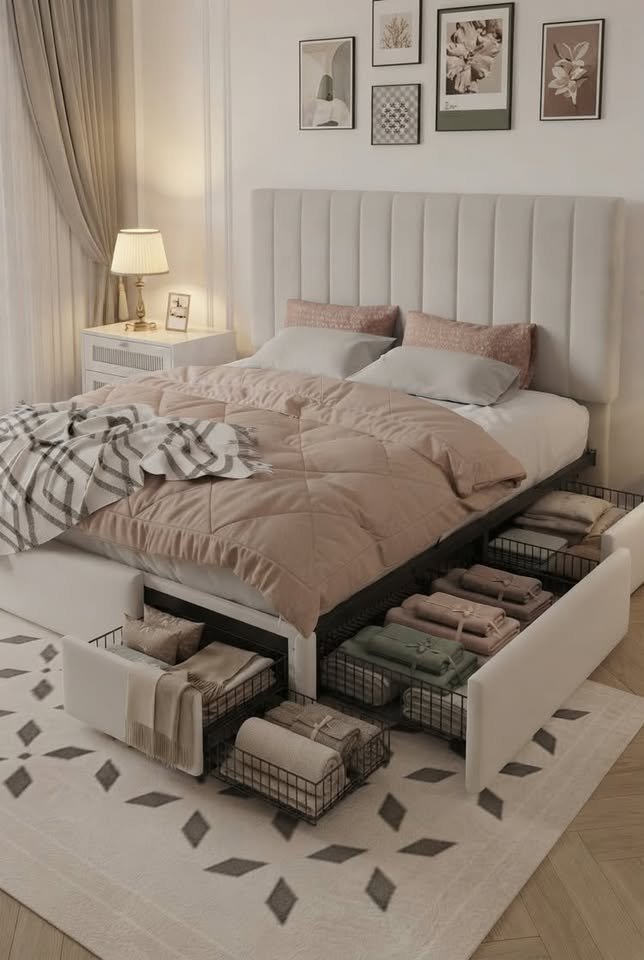
Sometimes the best small bedroom layout ideas are not about changing where the bed goes. They are about making the bed work harder.
A queen bed with drawers underneath can replace some of the storage you would normally need from a large dresser or storage cabinet.
How to Style It
Use the under-bed area for things you do not need every day, such as:
- Extra bedding
- Seasonal clothes
- Spare pillows
- Towels
- Travel bags
Keep the visible furniture minimal so the room does not feel packed.
What to Avoid
- Blocked Drawers: Make sure rugs and bedside tables do not prevent the drawers from opening.
- Stuffing Everything Under the Bed: Organize items in separate containers instead of creating one messy storage zone.
- Open Storage: Covered boxes keep stored items cleaner.
Pro Tip
Use labeled fabric storage bags inside the drawers. You will be able to find seasonal items without pulling everything out.
8. Create a Small Work Area Beside the Queen Bed
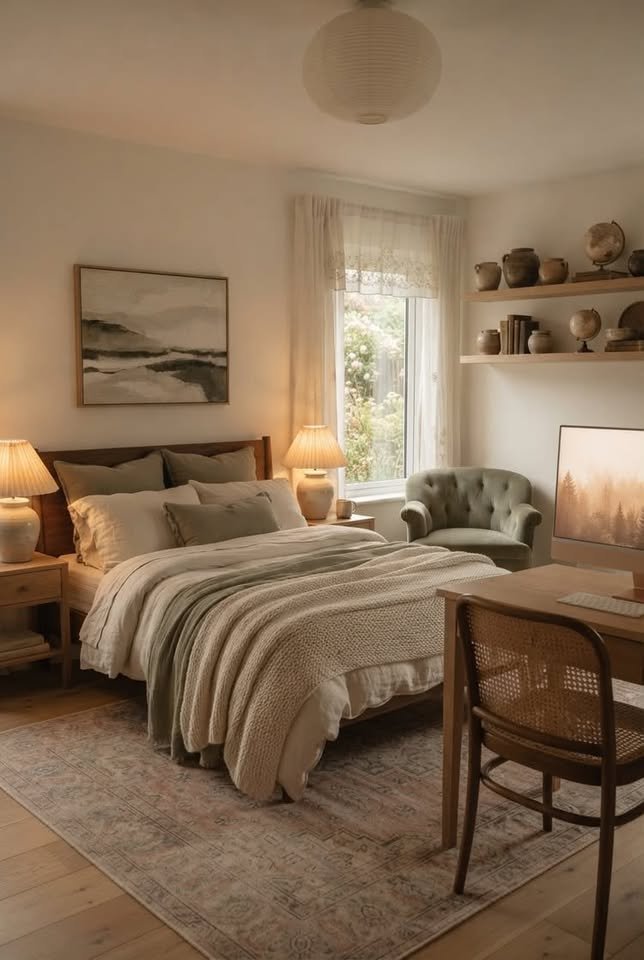
If your bedroom also needs to function as a workspace, you do not necessarily need a separate room.
A slim desk can fit beside the queen bed or against the opposite wall, depending on your room shape. The goal is to create a clear separation between the sleeping and working areas.
How to Style It
Choose a desk that is narrow enough to leave a comfortable walkway. A simple wooden desk can look more like bedroom furniture than a bulky office setup.
Use a chair that slides completely underneath when you are finished working.
What to Avoid
- Large Office Chairs: They take up too much visual and physical space.
- Deep Desks: A desk that sticks far into the room can make the layout difficult to walk through.
- Work Clutter: Keep papers, chargers, and cables organized so your bedroom still feels relaxing.
Pro Tip
Choose a small desk with drawers. It can also work as a dressing table when you are not studying or working.
9. Add a Reading Nook to an Empty Corner
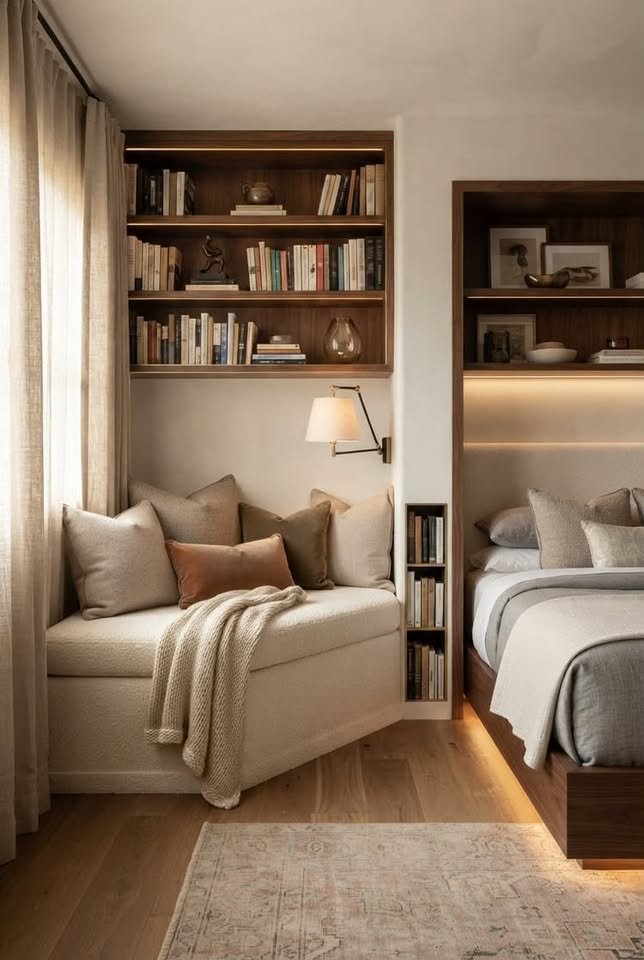
An empty corner does not always need another storage cabinet. If you have enough storage already, turn that unused area into a small reading or relaxing spot.
A slim chair, small side table, and floor lamp can create a useful second zone without overwhelming the room.
How to Style It
Choose furniture with a small footprint. A compact accent chair works better than a large armchair.
Add one cushion and a soft throw instead of filling the chair with decorative pillows.
What to Avoid
- Oversized Chairs: They can quickly make the room feel crowded.
- No Task Lighting: A reading corner needs its own light.
- Too Many Accessories: Keep the area simple so it still feels spacious.
Pro Tip
If the corner is beside a window, use the natural light during the day and add a slim floor lamp for evening reading.
10. Put the Wardrobe on the Opposite Wall
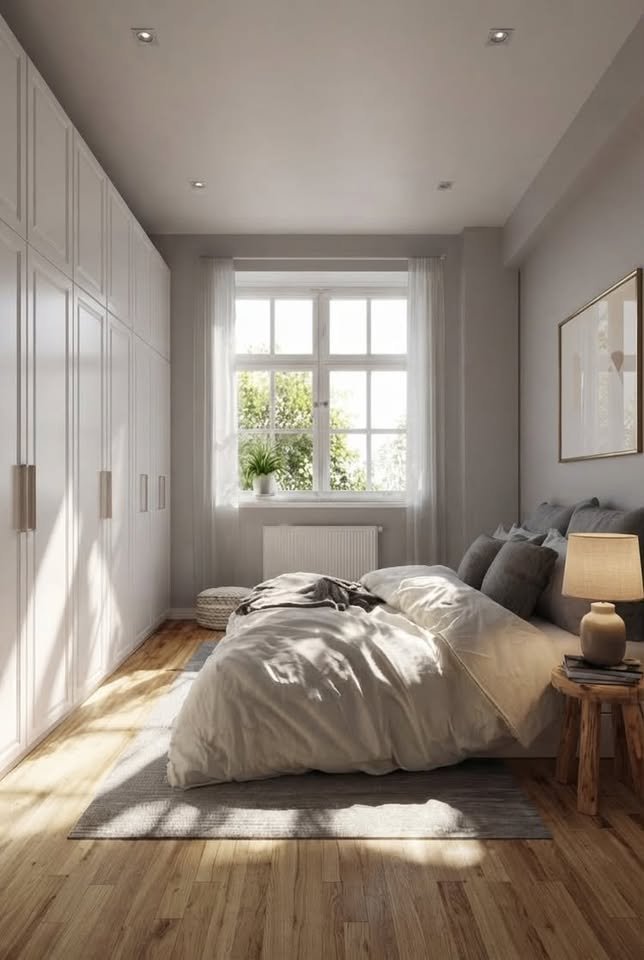
For a narrow room, placing the wardrobe on the wall opposite the queen bed can create a simple and organized layout.
Instead of spreading storage around the room, you concentrate it on one wall. This makes the rest of the bedroom easier to arrange.
How to Style It
Full-height wardrobes are particularly useful because they use vertical space instead of taking up additional floor area.
Light-colored doors can also make the storage wall blend into the room.
What to Avoid
- Outward-Swinging Doors: They may collide with the bed in a tight room.
- Large Freestanding Dressers: Avoid adding another bulky storage piece if the wardrobe already provides enough storage.
- Dark Storage Walls: Very dark cabinetry can visually shorten a narrow room.
Pro Tip
Use sliding wardrobe doors when space between the bed and wardrobe is limited. You will not need extra clearance to open the doors.
11. Free Up the Nightstands With Wall-Mounted Lights
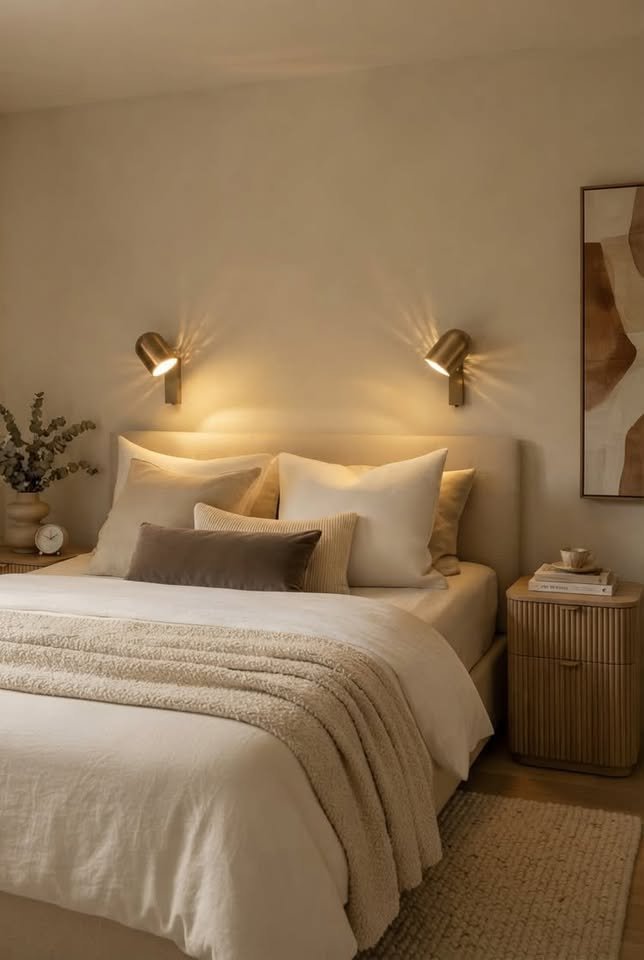
Lighting can actually change how practical a small bedroom feels. Instead of using table lamps that occupy half of each nightstand, mount the lights on the wall.
This leaves more space for things you actually use at bedtime.
How to Style It
Pair simple sconces with compact nightstands. Keep the bedding soft and layered to balance the harder lines of the wall lighting.
Warm white bulbs generally create a more comfortable bedroom atmosphere in the evening.
What to Avoid
- Large Table Lamps: They waste valuable nightstand space.
- Low-Hanging Lights: Make sure wall fixtures are positioned safely and comfortably.
- Harsh Cool Lighting: Very blue or bright lighting can make a bedroom feel less relaxing.
Pro Tip
Choose adjustable sconces if you like reading in bed. You can direct the light toward your book instead of lighting up the entire room.
12. Keep the Queen Bed Visually Light
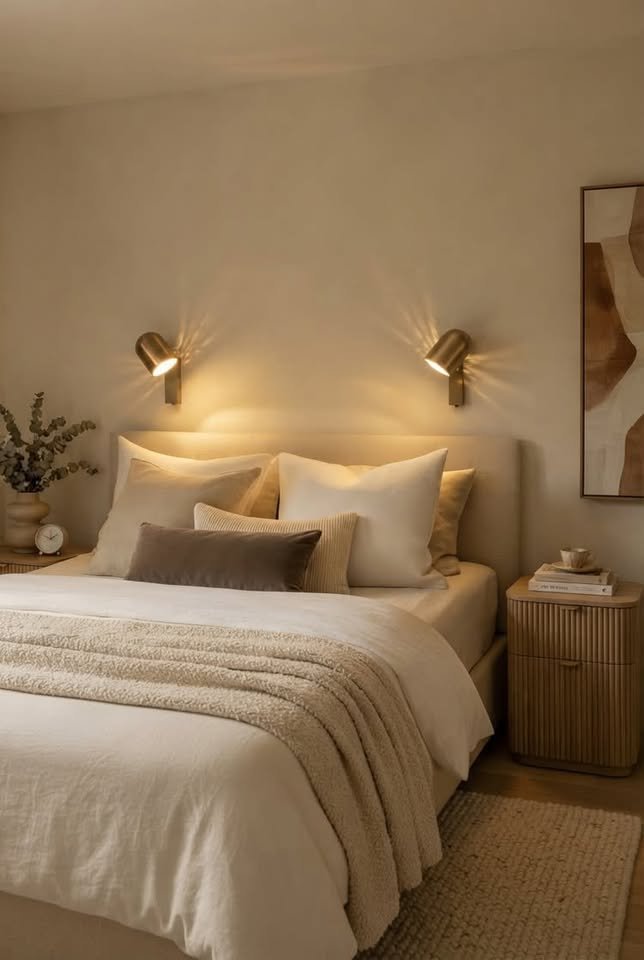
One of the easiest ways to make a small bedroom feel bigger is to avoid making the bed look visually heavy.
A low-profile bed frame with visible floor underneath can create more open sightlines across the room. You can combine this with slim furniture and a lighter color palette.
How to Style It
Choose a bed frame with simple legs or a raised base. Keep the area underneath clear rather than using it as open storage.
Use soft bedding in shades such as cream, light beige, muted blue, or dusty lilac.
What to Avoid
- Heavy Solid Furniture Everywhere: One large piece can work, but several bulky pieces will make the room feel cramped.
- Too Many Dark Colors: Dark accents are fine, but balance them with lighter walls and bedding.
- Filling Every Empty Corner: Empty floor space is useful in a small bedroom.
Pro Tip
Keep the floor around the bed as visible as possible. The more continuous floor you can see, the more open the room tends to feel.
How to Make a Small Bedroom With a Queen Bed Feel Bigger
The layout is only one part of creating a comfortable small bedroom. Once you have positioned the queen bed, use these simple tricks to make the entire room work better.
1. Use the Walls for Storage
When floor space is limited, look upward. Floating shelves, wall-mounted lights, tall wardrobes, and built-in storage can give you useful storage without taking up much floor area.
2. Keep the Bed as the Main Focus
A queen bed is already the largest piece in most small bedrooms. Let it be the main feature instead of surrounding it with too many decorative pieces.
3. Choose Furniture Based on Scale
You do not necessarily need tiny furniture. You need appropriately sized furniture.
A slim nightstand, narrow dresser, shallow wardrobe, or compact desk will usually work better than oversized furniture designed for a large bedroom.
4. Leave Some Empty Space
Do not feel like every corner needs to be decorated.
Empty floor space helps create clear walking paths and makes the bedroom feel less cluttered.
5. Layer the Bedding
A simple queen bed can look much more finished with thoughtful bedding layers:
Fitted sheet → flat sheet → duvet/comforter → folded throw → 2–4 pillows
You do not need ten decorative pillows. A few different textures can make the bed look comfortable without making it difficult to use.
6. Use One or Two Strong Design Features
Instead of adding lots of small decorations, choose one feature that gives the bedroom personality. This could be:
- A textured wall
- A large mirror
- A beautiful headboard
- Statement lighting
- A large piece of artwork
- Interesting bedding
This keeps the room interesting without making it visually busy.
What to Avoid in a Small Bedroom With a Queen Bed
Even a good layout can stop working when too many things are added afterward.
Avoid oversized nightstands. They can make the sides of the bed feel cramped.
Avoid furniture that blocks doors or drawers. Always check how doors open before deciding where furniture goes.
Avoid using every wall for decoration. Some empty wall space helps the room breathe.
Avoid buying furniture before measuring. Measure the bed, walking areas, doors, windows, and existing furniture first.
Avoid too many different colors. A simple palette usually makes a compact room feel more organized.
Avoid turning the floor into storage. Use vertical or hidden storage whenever possible.
Final Thoughts
The best small bedroom layout ideas are not necessarily the most complicated ones. With a queen bed, the biggest difference usually comes from choosing the right position and protecting the walking space around it.
Whether you center the bed, tuck it into a corner, place it under a window, or build storage around it, the goal is the same: make every part of the room useful without making it feel packed.
If you are working with a particularly small room, start with the queen bed first. Once its position is right, add only the furniture and storage you genuinely need. That simple approach can make small bedroom ideas with a queen bed much easier to plan and much more comfortable to live with.
I hope these small bedroom layout ideas help you make the most of your space. You don’t need a big budget or a complete makeover—sometimes a better layout and a few small changes are all you need to make your bedroom feel more comfortable and put together. Thanks for reading, and I hope you found a few ideas worth trying!
Leave a Reply